Cell banking underpins modern biomanufacturing. It enables long-term supply through master and working cell banks that support diverse applications from CHO-based biologics, vaccine development, and cell therapy manufacturing. Yet despite its central role, the cell banking process is often treated as static or routine.
Manual handling, open steps, and disconnected equipment can undermine both efficiency and product quality. The impact is felt downstream: lower viability at the seeding stage reduces expansion potential, which can ultimately hinder final product yield. These early gaps in banking ripple across development and scale-up, turning what should be a foundation into a fragile point of failure.
The question is simple: how can we modernize cell banking to close these gaps without compromising quality or compliance?
Why innovation matters in the cell banking process
Traditional banking methods weren’t designed for today’s demands. High-density cultures strain legacy processes. Starting with high-density seed banks can dramatically shorten seed train startup time, but only if systems can handle dense cultures without compromising viability. Most automated centrifuges struggle with viability and recovery, while conical centrifuges introduce open handling and manual workflows. What works at small scale often breaks down when volumes grow or when more sensitive cell types are introduced.
These gaps show up in familiar ways:
Manual and open steps: concentration, washing, and formulation handled in biosafety cabinets or open vessels increase contamination risk, extend cleanroom time, and vary by operator.
Patchwork equipment: relying on conicals, pumps, and transfers slows tech transfer and adds batch-to-batch variability.
Limited recipe control: Traditional systems lack integrated automation and recipe-driven workflows, making it hard to reproduce results across sites or scale processes without lengthy revalidation.
What future-ready cell banking systems must deliver
A modern cell banking process needs to concentrate, wash, and prepare cells efficiently while protecting viability, even in high-density CHO cultures or with fragile types like iPSCs, NSCs, or MSCs.
Systems that are built for the future share some must-haves:
Closed, single-use design to cut contamination risk and avoid the burden of CIP/SIP cycles.
Low-shear processing that preserves cell health during harvest and banking.
High throughput and strong concentration factors to process dense cultures and enable high-density banking for faster scale-up.
Integrated buffer exchange and concentration in the same run, eliminating open transfers.
Automation and recipe control that standardize performance across operators and sites.
Support for both upstream and downstream needs, from cryopreservation to seed train initiation.
Together, these features create the foundation for automated cell banking that is reproducible, scalable, and ready for GMP manufacturing.
How the UniFuge family strengthens the cell banking process
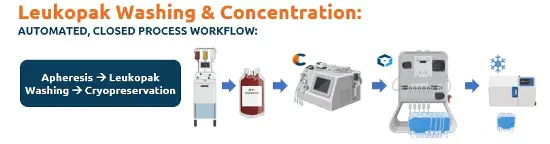
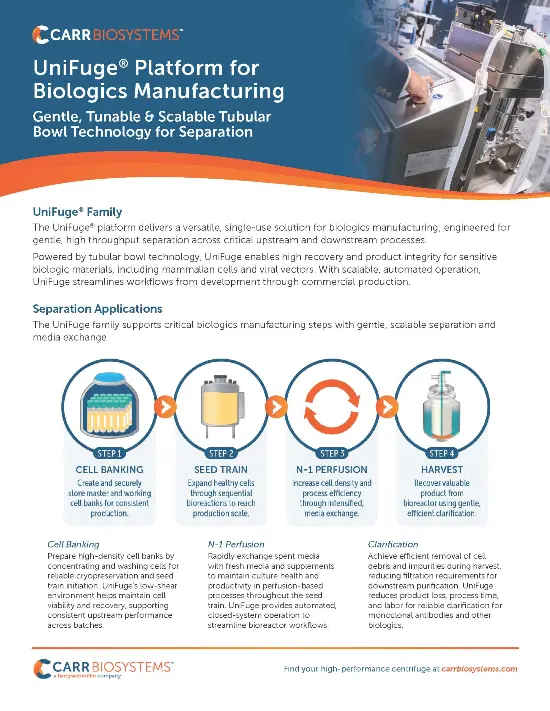
The UniFuge family supports key steps in the cell banking process: harvesting, washing, buffer exchange, and concentration. Closed, single-use systems remove the contamination risk and operator intervention required.
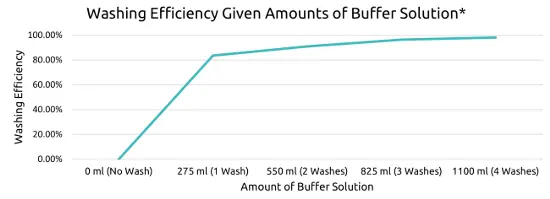
In practice, the UniFuge family delivers >90% recovery with minimal viability loss (<5%) across multiple cell types. Crucially, cells maintain viability not only after processing but also post-thaw, ensuring banks are fit for long-term use.
Recipe-driven automation keeps workflows consistent across operators and sites, while flexibility allows facilities to handle multiple cell types without reengineering equipment. Outputs are formulation- and cryo-ready, reducing downstream rework and enabling automated cell banking at scale.
Real-world scenarios: consistent recovery across applications
Scenario 1: iPSC banking before cryoperservation
iPSCs are highly sensitive to shear and prone to viability loss in traditional workflows. The UniFuge family replaces open bottle centrifugation with a closed, automated system for harvest, concentration, and buffer exchange. Gentle processing preserves aggregate integrity and supports high viable cell recovery, including the critical post-thaw stage.
Scenario 2: Producer cell lines for viral vector manufacturing
Producer cell lines such as HEK293, HeLa, and Sf9 underpin viral vector production and require banking under conditions that maintain genetic stability and viability. Variability during harvest or buffer exchange can alter cell physiology, impacting vector yield and quality. UniFuge provides versatile, reproducible processing parameters that minimize shear stress supporting the creation of master and working cell banks.
Scenario 3: GMP facilities and networks managing multiple cell lines
Multi-product platforms often span multiple sites, so reproducibility and simplicity are essential. UniFuge delivers both with an easy-to-install single-use bowl tubing set and recipe-driven automation, avoiding the complexity and operator intervention required for filtration-based setups. Even when processes require unique recipes, UniFuge ensures they run with the same ease of use and operational consistency.
Scenario 4: Transitioning from R&D to GMP production
Shifting from research to GMP can be slowed by extensive process characterization and optimization. Designed as an integrated product line, the UniFuge family provides a clear scale-up path: push-button automation, recipe-driven execution, and integrated data monitoring. Workflows scale from ~100 mL to 5L+ banking without reengineering, while maintaining reproducibility across batches and sites.
Building a GMP-ready cell banking strategy
Cell banking plays a decisive role in long-term manufacturing success. Weakness at this stage can ripple downstream into yield, quality, and scalability.
Teams are rethinking how technology supports early-stage workflows. By reducing footprint, improving quality, and enabling automation, the UniFuge family helps facilities prepare for GMP scale-up without adding complexity or risk.
Closing the gaps in the cell banking process requires systems that are flexible, consistent, and compliant. With UniFuge, organizations are modernizing their approach to automated cell banking, creating banks that deliver high recovery, preserve viability, and scale seamlessly.
Is your banking strategy setting you up for GMP success - or slowing you down?
Learn how UniFuge® supports automated cell banking with consistent recovery, preserved viability, and GMP-ready workflows.